
 Log In
 Register


Anxiety Lesson Plans
Generalised Anxiety Disorder
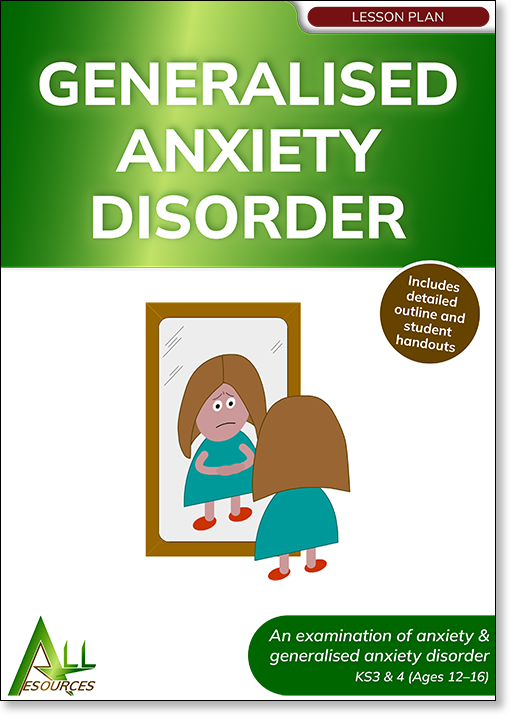
A lesson plan examining teenage anxiety and generalised anxiety disorder — a more extreme form of anxiety.
- Age range: 12 years and upwards
- Category: Schools
- Published: 2022
- Pages: 14

Price: £2.99 Now: £1.49
We all experience anxiety at some point in our lives. Some people, however, suffer with regular bouts of anxiety and they continually focus on negative things which makes them worry even more.
A certain level of anxiety is normal, but when it takes over your life you should seek medical help. Your GP may recommend CBT (cognitive behavioural therapy) or they may prescribe medication to control the feelings of anxiousness.
The cost of living crisis is also causing many people to become anxious and worried as they try to make ends meet. Sufferers of generalised anxiety disorder experience excessive anxiety which impacts on their daily life.
What is Generalised Anxiety Disorder?
Generalised anxiety disorder (GAD) is a mental health condition that causes people to feel anxious on a regular basis. People with GAD feel anxious about a wide range of issues and events, even things that would not concern the majority of people.
An anxiety attack usually consists of feelings of worry, fear, panic and terror and they can lead to a panic attack. A panic attack involves palpitations, trembling, shortness of breath and sweating — but they usually last a matter of minutes. There are a variety of situations that can increase anxiety and if the feelings of anxiety worsen it is advisable to seek professional help.
Generalised Anxiety Disorder Symptoms
Symptoms of GAD include:
- Difficulty sleeping
- Irritability
- A feeling of dread
- Muscle tenseness
- Inability to relax
- Trembling and shaking
- Panic attacks
- Worrying constantly
- Poor memory
- Lack of concentration
Panic Attacks
A panic attack is a period of severe anxiety. Someone experiencing a panic attack will have difficulty breathing accompanied by dizziness, as well as muscle cramps and a racing pulse. Panic attacks do not follow a pattern or any external threat. They are usually unexpected and can make the sufferer feel extremely stressed and exhausted.
Christian Notes
Dealing with anxiety — For christians, your spirituality is important to take care of and your mental health is directly linked to your faith. Deliverance from any mental torment starts with prayer. Ask the Lord for peace.